
An interview with Ivorian activist Edwige Brin on how survivors are drawing inspiration from the Murad Code to continue fighting for their rights
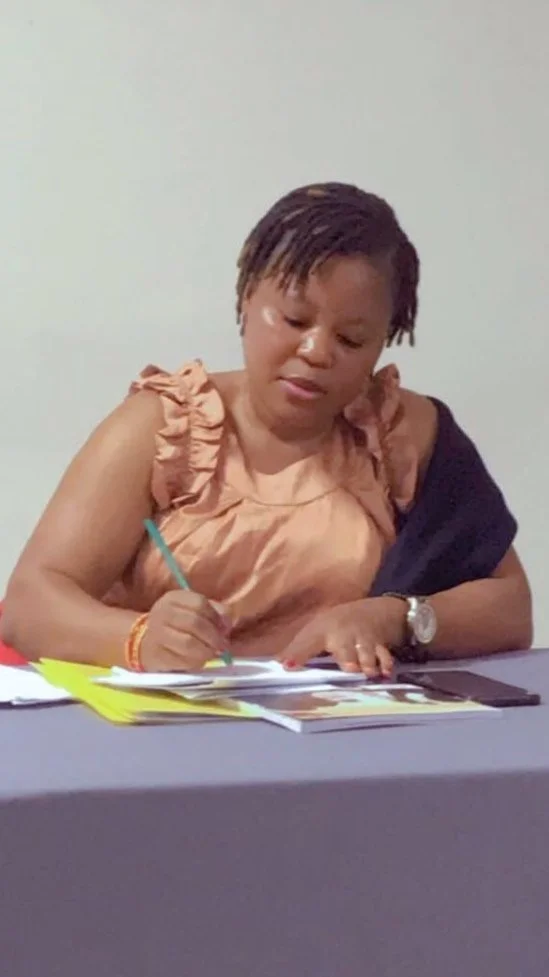
“Many survivors have given up hope, many have turned in on themselves. But discovering a Code like this has helped to move things forward.”
Edwige Brin is an activist from Côte d'Ivoire who has been working with victims of past conflicts for several years, including in collaboration with the Confederation of Ivorian Victims' Organisations, which promotes access to transitional justice, especially reparations, for victims.
For several months in 2025, Brin has been working with the Murad Code project team to deliver a project supporting the empowerment of Ivorian survivors of conflict-related sexual violence to use the Murad Code to demand respect for their rights.
Following the release of a groundbreaking advocacy video (“Don’t forget about us!”) made by survivors in the lead-up to the 2025 elections in Côte d'Ivoire, the Murad Code project team spoke to Brin about her reflections on the project.
This video is unique because it was made by survivors themselves. What motivated them to make this video?
The survivors shared a vision for making this video. They found the idea of making videos brilliant.
You see, we've tried so many things in Côte d'Ivoire. We've done so much advocacy with local, national and even international institutions. But we haven't really had any results. If you want to meet with authorities, you have to make an appointment to go and make your case. It's not easy to even get an appointment, and even when you do, things happen quickly and you don't have time to express yourself.
It was clear that we needed to change our strategy.
We see that today what attracts more attention is the visual – what is shown on the internet, on social networks. These days, with the internet, the way advocacy is done has moved forward. The survivors understood that. Now, with these videos, you can finally hear their voices – the actual voices of the survivors.
The survivors didn't know about the Murad Code before this project. How have they reacted and has it changed their approach to defending their rights or their message?
Yes, I think the Code has profoundly changed their vision and approach and their ability to understand certain concepts. The Code has enabled these survivors to know who they are.
First of all, it is based on international law, and there are guiding principles from start to finish on how to work with survivors. Documenting the stories of victims of the Ivorian crises has been going on since 2011. We really see how survivors of sexual violence are tired and exhausted. Every time people want to get them talking, they ask the same questions over and over again, and then the survivors get nothing in return.
“With this Code, they now know that they have dignity, they have rights that must be upheld by those who document their stories. Before answering an interview, for example, they can refuse or they can accept, but they're not obliged to do what the journalists, community workers or others want them to do. They now understand that their own well-being and wishes have priority.”
Frankly, it's really allowed them to grow into activists, it’s really helped them. They've come out knowing that they have rights and nothing can be imposed on them.
How did you work with them to ensure that their ideas and their voices remained at the heart of the project?
At first, it wasn't very clear to the group what the Murad Code even was. We held two workshops during which they got to know it. Once the group understood, it was the actual principles of the Code that influenced the script. The ideas in the Code itself are what pushed the survivors to write the scripts for the two videos. [Two videos: “Don’t forget about us!” and “Are you a survivor? I am one too”.]
Everything that was done was done in consideration of the principles of the Murad Code. There were online meetings to discuss and prepare each stage, an informed consent process, and we made sure that each member of the group knew what to expect. We offer psychosocial support at every stage, including now, in follow-up. We discussed all the options for protecting their identity while maintaining a strong message.
When the time came to write the scripts and shoot the videos, it was the survivors themselves who made the videos, we were just like supports standing on the sideline. We made adjustments to the syntax, here and there, but first and foremost it was done by the survivors themselves.
The Murad Code emphasises dignity, choice and informed consent. How did these values influence the way you worked with the group, from start to finish?
Let me give you an example. The cinematographer told the group that it would be better if the video showed their faces. She said that it’s been too long that people in our country don’t see or care about survivors, and that as soon as they saw their real faces, it could really move them to care and maybe make those in power finally pay attention.
At the beginning, a lot of the group agreed. They want the video to be heard. They saw that this cinematographer is an expert in communication, and they understood that she was right, that visuals can really compel people.
But going back to [the Murad Code] helped them think this through. As these discussions progressed, they changed their outlook. They understood that the most important thing was not to expose themselves, that their own well-being was the absolute priority, and that other ways to make a compelling video could be found with a bit more work and a bit more thinking on it.
What can others learn from this project in terms of ensuring an ethical and survivor-led approach when engaging with people affected by conflict-related sexual violence?
The truth is, at first when we learned about the Murad Code, we thought, ‘well, it's just another text’. We have so many international texts to learn and follow. Plus, for survivors, it was too theoretical.
But during this project, by really getting involved in the Code, to understand what it really means we – my colleagues and I, plus the survivor team – were all really enchanted. When they saw Nadia Murad, who the Code is named after, give open testimony, it gave them strength to be able to talk about their own situation.
This process of working together on the Code has enabled them to express themselves today.
Many survivors have given up hope, many have turned in on themselves. But discovering a Code like this has helped to move things forward for this group, to encourage them to continue defending their rights, especially with the elections coming up.
The Code stems directly from the principles of international law. In other words, it's based on the principles of dignity, respect for privacy and personal security. Compliance with this Code can prevent much of the harm that survivors continue to suffer.
The Code covers the entire process of interacting with survivors of conflict-related sexual violence, from start to finish. How to conduct investigations, how to gather information, how to follow up, how to connect with assistance.
I'd like to see other projects, other donors and international partners, and governments take ownership of this Code. I'd also like to see this Code taken into account in national legislation. That would give us a solid basis for ensuring that survivors' rights, their confidentiality and identities are respected, and respected in accordance with international principles.